Back to Blog
NativePHP Mobile v3 Is Getting Serious, But I Would Still Use It Carefully
NativePHP Mobile v3 brings plugin architecture, persistent PHP runtime, queue workers, better Android support, and PHP 8.3–8.5 compatibility. But is it ready for production?
Back
Mobile Development
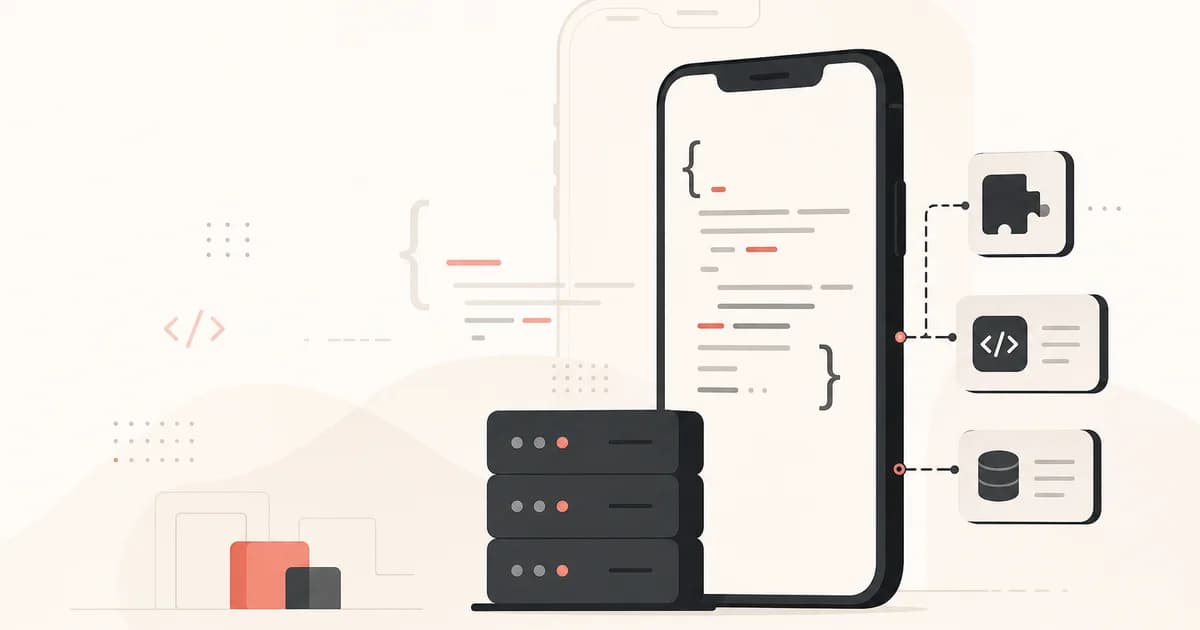
Table of contents
NativePHP is one of those projects that makes PHP developers curious.
The idea sounds simple and exciting: what if we can build mobile apps using Laravel and PHP?
For developers who already spend most of their time in Laravel, this is tempting. We already know the framework, the ecosystem, the patterns, the validation, the jobs, the service container, the database layer, and the way Laravel apps are usually structured.
But after looking at NativePHP Mobile v3, I think the interesting part is not just “PHP can build mobile apps now.”
Quick answer: NativePHP Mobile v3 is a meaningful step forward. Plugin architecture, persistent runtime, queue workers, and broader Android support make it more practical than earlier versions. But the v3.2–3.3 changelog is still heavy on fixes for POST handling, HMR, cold-launch races, and deep links. I would try it for internal tools, prototypes, and Laravel companion apps. For complex native UI, heavy offline sync, or long-term mobile maintenance, I would still compare it carefully with Flutter, React Native, or native stacks first.
The more interesting part is this:
NativePHP is slowly moving from an experimental idea into something more serious.
But it is still something I would use carefully.
The Big Change: NativePHP Is Becoming More Modular
One of the most important changes in NativePHP Mobile v3 is the plugin-based architecture.
Instead of putting everything into one large framework layer, NativePHP now treats native capabilities as plugins. Features like Camera, Dialog, File, Biometrics, Scanner, and other native APIs are shipped as individual plugins, with some available for free and others offered as premium plugins.
This matters because mobile apps are not only about rendering screens.
At some point, you need access to native device features. Camera, storage, push notifications, biometrics, geolocation, scanner, secure storage, and other platform-specific APIs are common requirements.
A plugin-based architecture makes NativePHP feel less like a simple web wrapper and more like a framework that is trying to build a real bridge between Laravel and mobile platforms.
That does not automatically make it better than Flutter or React Native.
But it does make the direction clearer.
Persistent Runtime Is Probably the Most Important Improvement
The biggest improvement in NativePHP Mobile v3.1 is the persistent PHP runtime.
Previously, one of the obvious concerns with running Laravel in a mobile environment was boot time. Laravel is powerful, but it is not exactly a tiny runtime. If the app needs to boot Laravel again and again for every request, performance can become a problem quickly.
With persistent runtime, Laravel boots once and the kernel is reused across requests.
This is a big deal.
Not because every app suddenly becomes fast by default, but because it changes the performance model. NativePHP is no longer just trying to make Laravel run inside a mobile app. It is trying to make Laravel stay alive in a way that makes sense for mobile usage.
The docs claim response times dropped to roughly 5–30ms, down from around 200–300ms before persistent runtime. Those numbers will vary by app, but the direction is what matters: NativePHP is treating mobile performance as a first-class problem, not an afterthought.
For me, this is the feature that makes NativePHP Mobile v3 more interesting than earlier versions. It also rhymes with what Laravel Octane does on the server—keep the kernel warm and reuse it. If that model interests you, see Laravel Octane in Real Production for the server-side version of the same idea.
Queues on Mobile Are Weird, But Also Interesting
NativePHP v3.1 also adds support for background queue workers.
As a Laravel developer, this feels familiar. You dispatch jobs, use a database queue, and let the worker process them.
But on mobile, this is also a bit unusual.
Mobile platforms have different rules around background execution, battery usage, app lifecycle, and system restrictions. So while having Laravel-style queues on mobile sounds powerful, I would still be careful before designing an app that depends heavily on background jobs.
For light background work, it could be useful.
For complex offline-first synchronization, long-running jobs, or critical background processing, I would test it deeply before trusting it in production.
Better Android Support Makes It More Practical
Another important change is Android support.
NativePHP Mobile v3.1 lowered the minimum Android requirement from Android 13 to Android 8. That is a practical improvement.
This matters especially if the target users are not always using the latest phones. In real-world projects, supporting older Android versions is often not optional. Many users still use mid-range or older devices, especially outside the high-end market.
So this change makes NativePHP more realistic for actual distribution, not just local experiments.
PHP 8.3 to 8.5 Support Is a Good Sign
NativePHP Mobile v3 also supports PHP 8.3 to PHP 8.5 and can detect the PHP version from composer.json.
This is a good sign because it means the project is trying to stay aligned with modern PHP.
For Laravel developers, this is important. We do not want a mobile toolchain that forces us to stay behind on PHP versions or avoid modern Laravel packages.
The addition of ICU/Intl support on iOS is also important because some Laravel packages depend on the intl extension. Without this kind of support, things may work on one platform and break on another.
And in mobile development, platform inconsistency is one of the fastest ways to lose time.
The Changelog Also Shows That NativePHP Is Still Young
Now, this is the part that we should not ignore.
A lot of the v3.2 and v3.3 changelog is filled with fixes.
There are fixes for Android POST body handling, iOS form POST issues, hot reload and HMR with persistent runtime, cold-launch race conditions, Vite asset loading, plugin dependency handling, deep links, query parameters, and background task crashes.
This is not a bad thing.
An active changelog means the project is alive. Bugs are being fixed. Edge cases are being discovered. The community is contributing.
But it also tells us something important:
NativePHP Mobile is still moving fast.
And when a tool moves fast, production adoption needs extra caution.
So, Should Laravel Developers Try NativePHP?
Yes, I think Laravel developers should try it.
But I would separate “try” from “build a serious production app immediately.”
NativePHP is very interesting for:
- internal tools
- prototypes
- proof of concept apps
- admin companion apps
- simple mobile apps for Laravel-based systems
- experiments with offline and native features
But for apps that require complex animations, heavy native UI, large-scale offline sync, deep platform integration, or long-term mobile team maintenance, I would still compare it carefully with Flutter, React Native, Kotlin, or Swift.
NativePHP gives Laravel developers a familiar path into mobile development.
But mobile development is still mobile development.
You still need to think about app lifecycle, device permissions, background execution, storage, performance, app store release process, and platform-specific behavior.
Laravel knowledge helps, but it does not remove those problems.
My Take
NativePHP Mobile v3 is a serious step forward.
The plugin architecture makes the ecosystem cleaner. Persistent runtime makes the performance story more believable. Queue support, Android 8+ support, PHP 8.3–8.5 support, and better native integration make it more practical than before.
But the changelog also shows that this is still a young and fast-moving project.
So my opinion is simple:
NativePHP is worth watching.
It is worth trying.
It may even be good enough for some real projects.
But I would not treat it as a default mobile stack yet.
For Laravel developers, NativePHP is exciting because it lets us reuse familiar tools in a new environment. But we still need to bring engineering judgment with us.
Because building mobile apps with PHP sounds fun.
Maintaining them in production is where the real test begins.
Related reading: What Is NativePHP?, NativePHP vs Flutter vs React Native (2026), Best PHP framework 2026.
References
- Changelog – NativePHP mobile v3 – v3.0 plugin architecture, v3.1 persistent runtime and queue workers, v3.2–3.3 fixes
- Introduction – NativePHP mobile v3 – How NativePHP works, runtime, shell, and bridges
- NativePHP for Mobile is Now Free – v3 free/MIT announcement, plugin system, Jump
Comments
No comments yet
Loading comments...